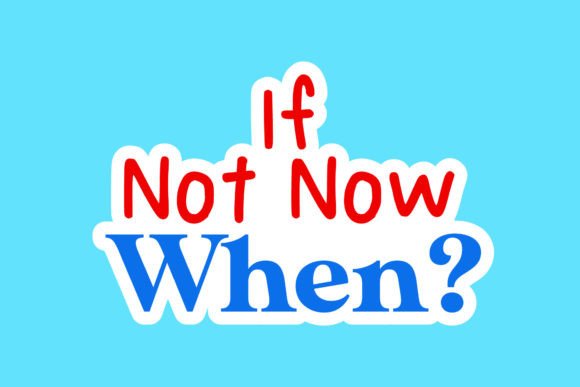
Back to School Sticker If Not Now When: A Practical Guide for Designers and Educators
“Back to School Sticker If Not Now When” is more than a motivational phrase—it’s a design asset built for clarity, versatility, and immediate usability. Unlike generic school-themed stickers that rely on clichés like apples or backpacks, this sticker centers on a concise, time-sensitive call to action: urgency paired with intentionality. The phrasing resonates with educators preparing classrooms, parents organizing supplies, and students setting goals—making it functionally adaptable across physical and digital contexts.
What Sets This Sticker Apart
The distinction lies in its dual nature: linguistic precision and technical readiness. “If Not Now When” isn’t just aspirational—it invites reflection on timing, responsibility, and follow-through. That nuance gives the sticker staying power beyond August; it works equally well in orientation week, mid-semester check-ins, or end-of-year reflection activities. Equally important is how it’s delivered: six format files, all sized to 1920px × 1280px, ensuring consistency across platforms without manual resizing or quality loss.
This isn’t a single-use graphic. It’s a production-ready resource designed for real-world workflows—whether you’re printing vinyl decals for locker doors, embedding into a Google Slides presentation, layering into Canva templates, or importing into Cricut Design Space for cut-out projects.
Format Flexibility: Why Six Files Matter
Not all sticker files behave the same way. Here’s how each format serves a different practical need:
- AI (Adobe Illustrator): Best for users who need full vector editing—changing colors, adjusting text spacing, or integrating with other layered assets.
- EPS: A legacy but still widely supported vector format, especially useful for print vendors or older design software.
- SVG: Ideal for web use—scalable, lightweight, and compatible with HTML/CSS workflows or LMS dashboards like Canvas or Moodle.
- DXF: Required for CNC machines, laser cutters, and die-cutting tools—key if you’re producing physical stickers at scale or customizing shapes.
- JPG: High-resolution raster output for quick sharing, social media posts, or email newsletters where transparency isn’t needed.
- PNG: Includes alpha transparency, making it suitable for overlays on photos, video thumbnails, or digital signage with non-white backgrounds.
Having all six formats eliminates guesswork. You don’t need to convert files yourself—or risk losing quality, layers, or scalability. That saves time, reduces trial-and-error, and supports both novice and experienced users working across environments.
Comparing With Alternatives
Many back-to-school graphics fall into two broad categories: free downloadable PNGs (often low-res or watermarked) and subscription-based design libraries (which require ongoing access). “Back to School Sticker If Not Now When” sits between them—not free, but not locked behind recurring fees either. You own the files outright, with no attribution requirements or usage caps.
Compared to editable Canva templates, this sticker offers greater fidelity and control: no reliance on internet connectivity, no platform-specific limitations, and no risk of template updates altering your saved version. Compared to hand-drawn or custom-designed stickers, it delivers professional typography and balanced composition without requiring design skill or commissioning costs.
That said, it’s not a replacement for fully bespoke work. If your school has strict brand guidelines—specific Pantone colors, mandatory logo placement, or bilingual requirements—you’ll likely need customization beyond what’s included. Similarly, if your use case demands animation (e.g., a looping GIF for a welcome banner), this static set won’t suffice without additional editing.
When This Sticker Fits—and When It Doesn’t
This resource shines in situations where speed, consistency, and message alignment matter most. For example:
- A middle school counselor creating printable goal-setting handouts for advisory periods.
- A PTA committee designing reusable classroom door signs for the first week of school.
- An online tutor adding branded visuals to Zoom backgrounds or course PDFs.
- A small business owner selling themed stationery bundles and needing clean, scalable artwork for product mockups.
In these cases, the sticker’s clarity and format range reduce friction. There’s no need to hunt for fonts, adjust kerning, or troubleshoot export settings—everything works as intended out of the box.
It’s less ideal when context demands high specificity. Suppose your district uses “Ready, Set, Grow!” as its official theme slogan. Swapping “If Not Now When” for that phrase would require editing—and while the AI and SVG files support that, doing so introduces variables: font licensing, spacing adjustments, and potential misalignment with institutional tone. Likewise, if your audience includes early elementary students, the abstract phrasing may need scaffolding—like pairing the sticker with simple icons or translated versions—which isn’t included here.
Realistic Use Cases and Workflow Integration
Consider how educators actually use such assets. A high school English teacher might insert the PNG into a digital syllabus header, then use the SVG version to animate a subtle fade-in during a first-day slide deck. Meanwhile, their colleague in art education imports the DXF file into a Glowforge interface to cut durable acrylic versions for student portfolios.
For homeschooling families, the JPG and PNG files allow quick printing on sticker paper using standard inkjet printers—no specialized software required. The EPS and AI files give more advanced users room to adapt: changing “Back to School” to “Back to Homeschool,” adjusting line weight for embroidery digitizing, or isolating the “If Not Now When” portion for a minimalist desk plaque.
None of those adaptations are pre-built—but the file structure makes them feasible without starting from scratch. That balance—ready-to-use yet open to iteration—is what makes this sticker a pragmatic choice rather than a decorative afterthought.
Limitations Worth Acknowledging
No single design asset covers every scenario. This sticker doesn’t include alternate color schemes, icon variants, or multilingual translations. It doesn’t come with editable text layers in raster formats (JPG/PNG), so changes there require re-exporting from vector sources. And while the canvas size (1920×1280) suits most digital displays and common print ratios, extremely narrow applications—like a 2-inch-tall laptop decal—may need cropping or scaling that affects visual balance.
Also, because the phrase leans toward reflective or motivational use, it’s less suited for purely logistical contexts—say, labeling supply bins or tracking attendance. In those cases, clearer, action-oriented labels (“Sharpeners Here,” “Homework Due Friday”) often serve better.
Making an Informed Choice
Choosing “Back to School Sticker If Not Now When” comes down to whether your priority is message resonance *and* technical flexibility—not just aesthetics. If you value having one cohesive visual element that adapts cleanly across print, web, and fabrication tools—and if the sentiment aligns with your audience’s mindset—then the included formats offer tangible efficiency gains.
If, however, your needs center on rapid iteration across dozens of variations (seasonal themes, grade-level adaptations, accessibility-focused contrast modes), a modular design system or custom illustration package may provide more long-term scalability—even if it requires more upfront investment.
Ultimately, “Back to School Sticker If Not Now When” works best when treated as a foundational piece: reliable, reusable, and quietly intentional. It won’t replace thoughtful planning or audience research—but it can remove one layer of executional uncertainty, letting you focus on what matters most: supporting learners, building community, and making meaningful starts.