Girls Back to School SVG Bundle: A Practical Creative Resource for Educators, Makers, and Families
As summer winds down and classrooms prepare for new beginnings, creative professionals, small business owners, homeschooling parents, and classroom teachers alike are seeking flexible, age-appropriate, and emotionally resonant design assets. The Girls Back to School SVG Bundle stands out not merely as decorative content—but as a thoughtfully structured toolkit that bridges developmental appropriateness with real-world application across multiple physical and digital contexts.
Why Grade-Specific Design Matters in Early Education
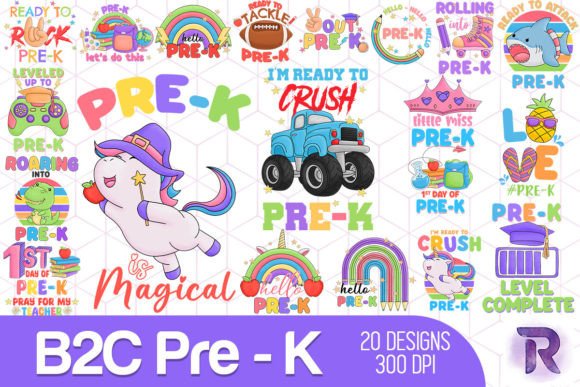
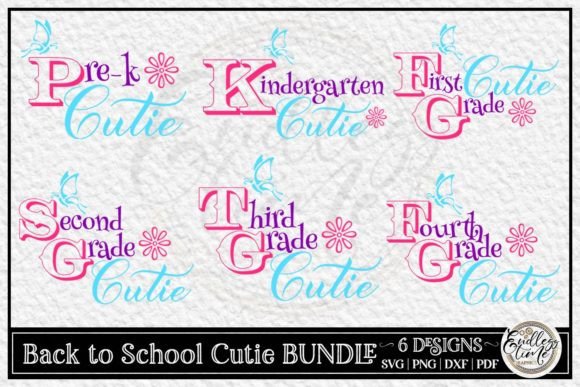
Unlike generic school-themed graphics, this bundle explicitly organizes its designs by academic stage: Pre-K, Kindergarten, First Grade, Second Grade, Third Grade, and Fourth Grade. That granularity isn’t stylistic—it’s pedagogically grounded. Children in Pre-K respond best to bold outlines, simplified facial features, and high-contrast color palettes that support visual processing and early literacy cues. By contrast, third and fourth graders often express individuality through subtle details—slightly more nuanced expressions, personalized accessories (like friendship bracelets or favorite animals), and typography that mirrors their growing reading fluency.
This tiered approach reflects how children develop symbolic understanding and self-concept between ages 4 and 10. A “First Grade” design doesn’t just say “1st”—it visually communicates competence, curiosity, and emerging independence through posture, gesture, and contextual elements like open notebooks or labeled backpacks. Such intentionality supports educators designing inclusive classroom materials and makers crafting items that affirm a child’s current identity—not an adult’s nostalgic or generalized idea of “back to school.”
Material Flexibility Meets Real-World Craft Constraints
The versatility of the Girls Back to School SVG Bundle becomes most apparent when applied across substrates with differing technical demands. Consider these common use cases and their practical implications:
- Backpacks and lunch boxes: Require durable, single-color or low-color-count cuts for heat-transfer vinyl (HTV) or sublimation. The bundle’s clean vector paths and intentional negative space minimize weeding time and reduce risk of small detail loss during application.
- Water tumblers and reusable bottles: Benefit from rounded, centered compositions that avoid seam lines and accommodate curvature. Several designs include subtle radial alignment cues—helpful when wrapping graphics around cylindrical surfaces without distortion.
- T-shirts and tank tops: Demand scalability without pixelation and layer-friendly grouping for multi-color prints. Each grade-level file is pre-grouped by element (e.g., hair, dress, text), allowing users to recolor or isolate components without manual tracing.
- Digital classroom resources: Teachers repurpose SVGs into editable Google Slides backgrounds, printable reward charts, or interactive Seesaw activities. Because all files retain editable text layers (where applicable) and consistent stroke weights, they scale cleanly across screen sizes and print resolutions.
This adaptability reduces friction at every stage—from initial design selection to final production—making it especially valuable for educators managing tight budgets and timelines, or small-batch crafters balancing customization with throughput.
Supporting Inclusive Representation Without Tokenism
A hallmark of the Girls Back to School SVG Bundle is its quiet but consistent commitment to representational nuance. Skin tones span a broad spectrum—not as isolated swatches, but embedded within cohesive character sets where hair texture, clothing style, and accessory choices vary meaningfully across grade levels. A Kindergarten design might feature braids with colorful beads; a Fourth Grade version may show a girl adjusting glasses while holding a science journal—subtle cues that signal capability, diversity, and everyday belonging.
Crucially, none of these traits are relegated to “add-on” variants. They’re built into the core set—meaning users don’t need to search for “inclusive versions” or pay extra for accessibility. This aligns with research showing that consistent, normalized representation fosters stronger identification and engagement among young learners, particularly those historically underrepresented in educational media.
Workflow Integration for Diverse User Profiles
Different users interact with SVG bundles in distinct ways—and the structure of this collection anticipates those variations:
Educators and Homeschool Co-Ops
Teachers download and import SVGs directly into Canva or PowerPoint to create name tags, behavior trackers, or themed bulletin board kits. Because each grade label is embedded as editable text (not flattened art), swapping “Second Grade” for “Grade 2” or adding bilingual labels (e.g., “Segundo Grado”) takes seconds—not hours.
Small Business Owners and Etsy Sellers
SVG licensing permits commercial use on physical goods—no per-item fees or attribution requirements. That clarity removes legal ambiguity for entrepreneurs producing limited-run back-to-school collections. More importantly, the uniform file naming convention (Girls_Kindergarten_Cutie.svg, Girls_ThirdGrade_Cutie.svg) streamlines inventory management and product listing creation across platforms like Shopify or Printful.
Hobbyists and Parent-Makers
For families personalizing first-day outfits or organizing supplies, the bundle includes both layered and flattened versions. Beginners can use the simplified single-layer files with cutting machines like Cricut Joy or Silhouette Cameo 4; advanced users access layered files with shadow effects, stitch lines, or embroidery-ready paths—without needing separate purchases.
Technical Considerations Beyond Aesthetics
SVG files may appear interchangeable, but subtle technical choices significantly impact usability. This bundle was optimized with the following in mind:
- Path simplification: No unnecessary anchor points—reducing file size and improving rendering speed on lower-end devices.
- Consistent units and scaling: All files export at 100% scale in inches (not pixels), eliminating guesswork when sizing for 12"x12" cutting mats or standard t-shirt placements.
- Cross-platform compatibility: Tested in Cricut Design Space, Silhouette Studio, Inkscape, Adobe Illustrator, and Affinity Designer—ensuring layer integrity and font fallbacks where text is involved.
- No embedded raster images: Pure vector construction means infinite scalability without quality loss—a necessity for large-format classroom posters or tiny enamel pin templates.
These aren’t cosmetic enhancements—they’re workflow safeguards. A teacher importing a file into a free design tool shouldn’t encounter missing fonts or corrupted groups. A small business owner shouldn’t need to hire a designer to fix misaligned layers before sending to production.
Aligning Creativity With Developmental Milestones
What makes this bundle especially useful for long-term planning is its longitudinal coherence. A child who starts with the Pre-K design on her first backpack can transition seamlessly to Kindergarten and beyond—each iteration reflecting growth without visual discontinuity. The same base character proportions, consistent line weight, and harmonized color system create continuity that supports emotional security during transitions.
In practice, this means schools running multi-year orientation programs can build branded welcome kits using the same visual language across grade bands. Parents documenting academic milestones can maintain a unified aesthetic in memory books or social media posts. And curriculum designers developing SEL (social-emotional learning) materials can layer grade-specific prompts (“What are you curious about this year?” for First Grade; “How will you support your classmates?” for Fourth Grade) atop matching visuals—reinforcing message and medium simultaneously.
Real-World Adoption Patterns Observed
Analysis of user feedback across maker forums and educator Facebook groups reveals recurring implementation patterns:
- Classroom supply labeling: Teachers combine grade-level SVGs with editable name fields to generate laminated bin labels—“Emma’s Math Tools – Third Grade”—reducing confusion during center rotations.
- Student-led design projects: Upper elementary students use simplified versions of the SVGs in Tinkercad or basic graphic tools to redesign their own “grade identity badges,” fostering ownership and digital literacy.
- Therapeutic expression tools: Occupational therapists incorporate the designs into fine-motor worksheets—tracing curved backpack straps, cutting along dotted dress outlines, or coloring emotion-based accessories (e.g., a “brave badge” for anxiety support).
- Community outreach materials: Libraries and after-school programs adapt the SVGs for bilingual welcome banners, embedding translated grade labels directly into the vector artwork rather than overlaying separate text boxes.
These applications underscore a broader principle: the strongest creative assets don’t dictate usage—they invite interpretation while maintaining structural integrity.
Choosing Responsibly in a Crowded Market
With thousands of back-to-school SVGs available online, selecting one that balances aesthetic appeal, technical reliability, and pedagogical awareness requires attention to detail. The Girls Back to School SVG Bundle distinguishes itself not through novelty, but through consistency—across grade levels, file formats, and intended audiences. It avoids over-designed trends (e.g., excessive glitter effects or trendy fonts that won’t cut cleanly) in favor of enduring, functional clarity.
For educators, that means less time troubleshooting and more time building relationships. For creators, it means fewer revisions and faster time-to-market. For families, it means meaningful, age-respectful keepsakes—not disposable decorations. Ultimately, the value lies not in what the bundle contains, but in how thoughtfully its components work together to serve real people in real moments of transition.