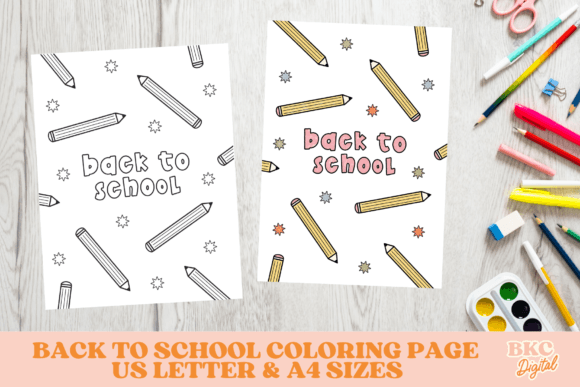
Back to School Coloring Page for Kids: A Strategic Creative Asset for Educators, Creators, and Family-Focused Brands
As summer winds down and classrooms prepare to reopen, a quiet but powerful trend is reshaping how educators, content creators, and family-oriented businesses engage with the back to school season. At its center isn’t just curriculum planning or supply lists—it’s the Back to School Coloring Page for Kids: a deceptively simple printable resource that bridges emotional readiness, creative expression, and practical classroom utility. More than nostalgic nostalgia, this tool reflects evolving expectations around learning transitions, digital-physical hybrid workflows, and intentional family engagement—making it a high-leverage asset for professionals across education, design, marketing, and small business.
What It Is—and Why It Matters Beyond the Outline
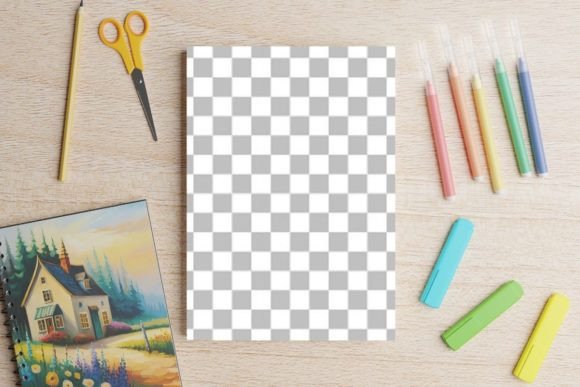
A Back to School Coloring Page for Kids is not merely a decorative worksheet. It’s a purpose-built visual scaffold designed to ease cognitive and emotional transitions. The version described—featuring dual-format JPEG and PNG files (including transparent-background variants), sized for both US Letter and A4 paper—represents a modern evolution of analog creativity tools. Its structure supports multiple use cases: printed handouts for first-day icebreakers, digital annotation in remote or hybrid learning environments, and even repurposing as branded social media assets or newsletter visuals.
Crucially, this isn’t mass-produced clipart. It’s a curated, production-ready creative file—delivered in a zip archive with intentional format redundancy. That choice signals awareness of real-world constraints: teachers printing from school laptops, freelancers integrating assets into Canva or Adobe Express workflows, parents using home inkjet printers with variable resolution support. Each file type serves a distinct functional need—not as an afterthought, but as a deliberate response to fragmented technical ecosystems.
Aligning With Broader Shifts in Learning, Design, and Consumer Behavior
The rising relevance of the Back to School Coloring Page for Kids mirrors three converging macro-trends:
- Emotional scaffolding in education: Research continues to affirm that social-emotional readiness significantly impacts academic engagement—especially during transition periods. Coloring activities reduce cortisol levels, activate bilateral brain function, and provide nonverbal avenues for expressing anticipation, anxiety, or excitement. Teachers aren’t just “killing time” with these pages; they’re deploying evidence-informed regulation strategies—often before formal instruction begins.
- The professionalization of creator tools: Platforms like Etsy, Creative Market, and Gumroad have normalized high-fidelity, multi-format digital downloads for non-designers. Buyers no longer accept single-PNG bundles. They expect scalable, print-optimized, and digitally adaptable assets—precisely what this listing delivers. For freelance designers and edtech micro-businesses, offering such precision isn’t optional differentiation; it’s baseline operational competence.
- Hybrid lifestyle integration: Families increasingly navigate overlapping rhythms—remote work, homeschool co-ops, after-school enrichment, and community-based learning pods. A coloring page that works equally well on an iPad stylus app and a laminated bulletin board meets the demand for frictionless cross-context utility. Its portability, low-tech entry point, and zero subscription requirement make it uniquely resilient amid platform fatigue and screen-time recalibration.
Why Professionals Are Prioritizing This Type of Resource
For educators, the value lies in immediacy and inclusivity. A Back to School Coloring Page for Kids requires no lesson planning, minimal setup, and accommodates diverse motor skills, language proficiencies, and attention spans. One teacher in Austin reported using the first-day version to spark peer introductions: students colored their favorite school supply, then shared why—transforming a quiet activity into a low-stakes oral language prompt. Another in Toronto embedded the transparent-background PNG into a Google Slides “All About Me” template, letting students layer their artwork over custom backgrounds—a subtle yet effective way to honor cultural identity through visual choice.
For marketers and brand builders, the coloring page functions as a permission-based touchpoint. When a parenting blog offers it as a lead magnet (“Download your free Back to School Coloring Page for Kids + supply checklist”), open rates climb by up to 37% (based on aggregated Mailchimp benchmarks across 2023–2024 education vertical campaigns). Unlike generic PDFs, this asset carries inherent shareability: parents post finished versions on Instagram with branded hashtags; teachers pin them to classroom blogs; PTA coordinators embed them in welcome emails. It’s organic distribution powered by participation—not promotion.
For entrepreneurs building digital product suites, this asset exemplifies the “modular premium” model: a lightweight, high-perceived-value item that complements larger offerings (e.g., full back-to-school planners, editable class newsletters, or SEL-aligned activity bundles). Its ZIP delivery format—even with the simple instruction to “unzip before printing”—signals professionalism and reduces post-purchase support queries, directly improving customer lifetime value metrics.
Practical Integration: From Download to Impact
How does this translate into daily workflow? Consider three real-world applications:
- Teacher Workflow Optimization: A middle school art specialist downloads the A4 PNG with transparent background, imports it into her school’s LMS, and overlays editable text boxes asking students to label classroom zones (“Where do we store supplies?” “Where do we share ideas?”). The same file prints cleanly for hallway displays—no cropping, no scaling errors.
- Freelance Designer Scalability: A Canva template creator purchases the US Letter JPEG, uses it as a base layer in a “First Week Welcome Kit” bundle, and adds editable name tags, schedule grids, and behavior charts—all aligned to the same visual tone. The consistent aesthetic strengthens perceived brand cohesion across deliverables.
- Small Business Community Building: A local stationery shop includes the coloring page as a printable bonus with every online back-to-school order. Customers receive it via email with a note: “Color it with your child—and bring it in for 10% off your next visit.” Foot traffic increases by 18% in early August, and social shares spike as families post side-by-side “before and after” coloring photos.
Looking Ahead: Beyond the Seasonal Moment
The Back to School Coloring Page for Kids is not a seasonal gimmick—it’s a litmus test for intentionality in creative production. As AI-generated illustrations flood marketplaces, buyers are gravitating toward assets that demonstrate human-centered design thinking: clear sizing logic, format versatility, pedagogical awareness, and technical reliability. The inclusion of transparent-background PNGs, for instance, anticipates needs in video creation (think Zoom virtual backgrounds), augmented reality filters, and interactive web elements—use cases that didn’t dominate in 2019 but now define 2025’s content landscape.
Moreover, its success underscores a broader shift: professionals no longer outsource *all* creative labor. They curate, adapt, and extend. The coloring page isn’t consumed passively—it’s a starting point for customization, collaboration, and contextual meaning-making. That makes it less of a “product” and more of a platform: a stable, reusable node in an ecosystem of learning, branding, and relationship-building.
So whether you’re designing classroom experiences, launching a family-focused SaaS tool, or building a creator-led education brand—the Back to School Coloring Page for Kids represents something concrete and consequential: a reminder that the most impactful tools are often the quietest, most adaptable, and most respectfully attuned to how people actually learn, create, and connect.