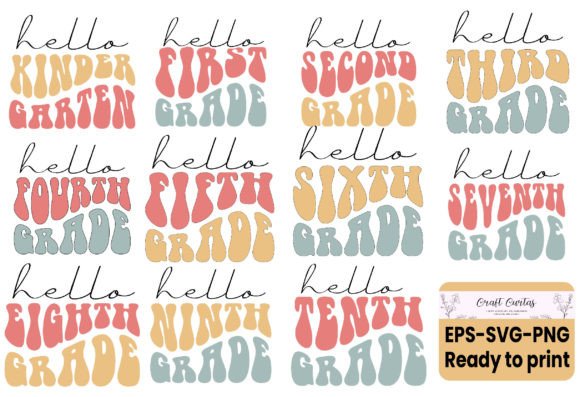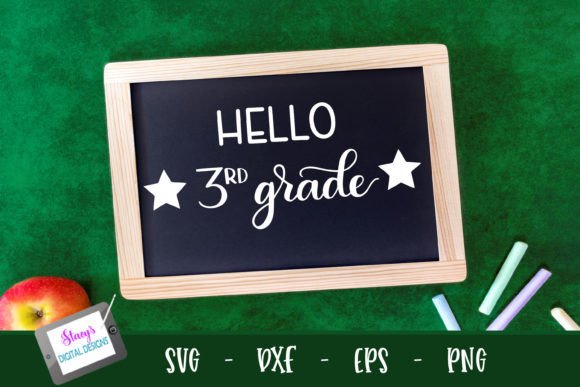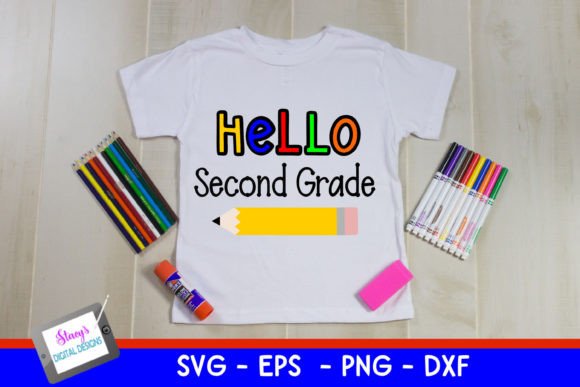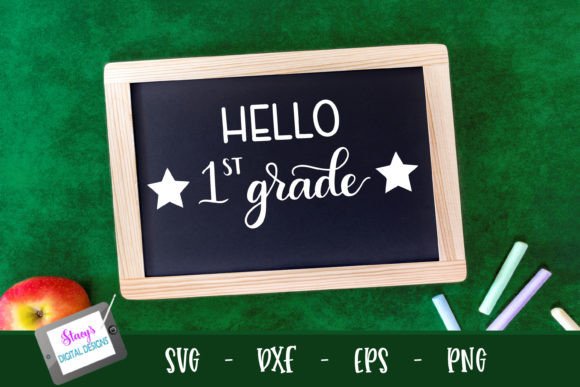
Back to School – Hello 1st Grade SVG
Back to School – Hello 1st Grade SVG isn’t just a decorative file—it’s a precision tool for creators who understand that timing, tone, and intentionality shape outcomes. Whether you’re designing classroom welcome signs, launching a small-batch merch line for new teachers, or building branded back-to-school email campaigns, this handlettered design delivers immediate visual clarity with built-in emotional resonance. Its value lies not in novelty, but in how effectively it bridges purpose and execution—when used deliberately.
Why This SVG Fits Real Strategic Needs
Most digital design assets are either overly generic or too niche to scale across use cases. Back to School – Hello 1st Grade SVG avoids both pitfalls. Its handlettered aesthetic conveys warmth and approachability without sacrificing polish—critical when communicating with parents, educators, or young learners. Unlike stock graphics that feel detached from real classroom rhythms, this design carries subtle cues of authenticity: slight variations in stroke weight, organic spacing, and intentional imperfection that signal human care—not algorithmic repetition.
That matters because perception drives action. A welcome banner made from this SVG doesn’t just say “first grade”—it signals readiness, celebration, and continuity. For educators setting classroom culture, that’s foundational. For small business owners selling teacher supplies or custom backpack tags, it’s a trust signal that aligns their product with the values families seek: safety, encouragement, and thoughtful transition.
Practical Use Cases That Deliver Measurable Value
Strategic application starts with matching the asset to your goals—not the other way around. Here’s where Back to School – Hello 1st Grade SVG consistently delivers:
- Classroom onboarding materials: Print durable vinyl decals for cubbies, laminated name tags, or bulletin board headers. The included DXF and EPS files ensure clean cuts on Cricut, Silhouette, and Glowforge machines—no pixelation, no redraws.
- Teacher resource kits: Bundle the SVG with editable lesson plan templates or printable checklists. Educators pay for time-saving cohesion—not isolated graphics.
- Small business product lines: Apply the design to tote bags, water bottles, or laminated reward cards. Because the PNG is high-res and transparent-background, it integrates cleanly into print-on-demand workflows without manual masking.
- Digital communications: Use the SVG as a focal point in Canva-based newsletters or social posts. Its legibility at small sizes (thanks to generous letter spacing) means it works equally well on Instagram Stories and printed parent handouts.
The ZIP folder’s inclusion of SVG, PNG, black DXF, and EPS files isn’t just convenience—it’s operational foresight. You’re not locked into one software or output method. That flexibility reduces friction between planning and production, letting you pivot quickly when priorities shift (e.g., moving from in-person orientation signage to virtual welcome slide decks).
What to Confirm Before You Begin
Compatibility isn’t theoretical—it’s tactical. Before investing time in a project, verify two things: first, whether your cutting machine’s firmware supports the DXF version’s layer structure; second, whether your vector editor (Illustrator, Affinity Designer, Inkscape) opens the EPS without rendering artifacts. Older versions of some software struggle with embedded transparency or gradient meshes—even if the file appears fine in preview.
Also consider context. A handlettered “Hello 1st Grade” works powerfully in K–2 environments—but may feel developmentally mismatched for upper elementary branding or district-wide communications. Ask: Does this reinforce the message I need to send *right now*, or does it serve nostalgia more than strategy? If your audience includes multilingual families, pair the design with clear, translated text—not as a substitute, but as reinforcement.
Risks of Using It Without Clear Intent
SVG files like Back to School – Hello 1st Grade SVG become liabilities when treated as shortcuts instead of tools. Common missteps include:
- Using it as filler in a presentation without aligning font weight, color palette, or supporting imagery—creating visual dissonance that undermines credibility.
- Scaling it beyond recommended dimensions (especially in raster formats), resulting in jagged edges that suggest amateur execution—not thoughtful design.
- Assuming the file replaces messaging strategy. A beautiful “Hello 1st Grade” sign won’t compensate for unclear drop-off procedures, inconsistent communication channels, or under-resourced classrooms.
The risk isn’t technical—it’s strategic drift. When you default to aesthetics before clarifying purpose, you optimize for appearance over impact. That’s especially costly for educators balancing limited prep time and for small business owners managing tight margins. Every minute spent adjusting kerning on a banner should map directly to a measurable outcome: smoother transitions, stronger parent engagement, faster product iteration.
How to Use It Intentionally—Not Automatically
Intentional use begins with a simple question: What behavior or understanding do I want this to support? If the answer is “help new families feel welcomed during orientation,” then the SVG becomes part of a system: paired with a QR code linking to a video tour, printed on a magnet they’ll keep on their fridge, sized to fit a standard classroom door hanger. If the goal is “increase repeat orders from teacher customers,” embed it in a downloadable “First Week Survival Kit” PDF—positioning your brand as a partner, not just a vendor.
Also consider timing. Launching a “Hello 1st Grade” themed product in late July aligns with teacher planning cycles. Releasing it in mid-August often means competing with last-minute supply runs and administrative overload. Similarly, sharing a digital version via email works best when paired with actionable next steps (“Click here to download your editable seating chart template”)—not just the graphic alone.
Long-Term Value Beyond the First Project
This isn’t a one-season asset. With minor customization—changing color fills, adding school logos, or combining letters into new phrases (“Hello, Ms. Lee’s Class”)—Back to School – Hello 1st Grade SVG becomes a modular foundation. Educators can reuse it year after year with updated names and dates. Designers can build style guides around its letterforms, ensuring consistency across posters, slides, and handouts.
For digital product creators, it offers insight into what resonates: warm, legible, scalable handlettering with broad software compatibility. That informs future designs—not just for back-to-school, but for other milestone moments (welcome to kindergarten, farewell to 5th grade, meet your new principal). Each use sharpens your understanding of how typography functions as infrastructure—not decoration.
Final Strategic Note
Back to School – Hello 1st Grade SVG succeeds not because it’s perfect, but because it’s purpose-built for real constraints: limited time, variable tech access, diverse audiences, and high emotional stakes. Its strength lies in how easily it integrates into workflows that already exist—without demanding overhaul. That’s rare. Most design assets ask you to adapt to them. This one adapts with you.
So before opening the ZIP folder, pause. Name your goal. Identify your audience’s immediate need. Then open the file—not as an endpoint, but as a lever. Let the handlettered “Hello” be the start of something more deliberate, more connected, and more effective than what came before.