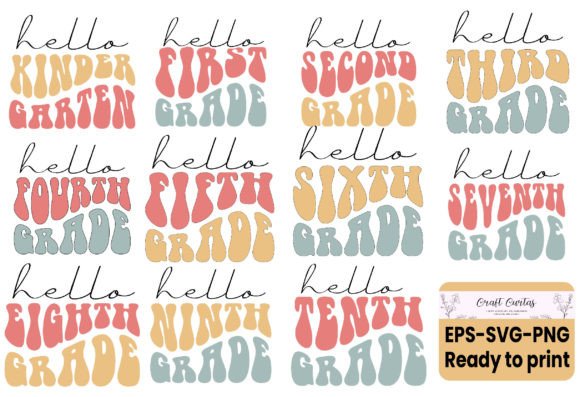
Back to School – Hello Second Grade: A Versatile Digital Design for Real Classroom & Home Projects
There’s something special about second grade—the first real leap into independent reading, multi-step math problems, and projects that feel less like practice and more like *real work*. It’s a milestone moment for kids—and for the adults who support them. That’s why Back to School – Hello Second Grade isn’t just another cheerful phrase on a printable. It’s a thoughtfully crafted digital design built to celebrate growth, spark confidence, and integrate seamlessly into the tools families and educators already use every day.
What Makes This Design More Than Just “Cute”?
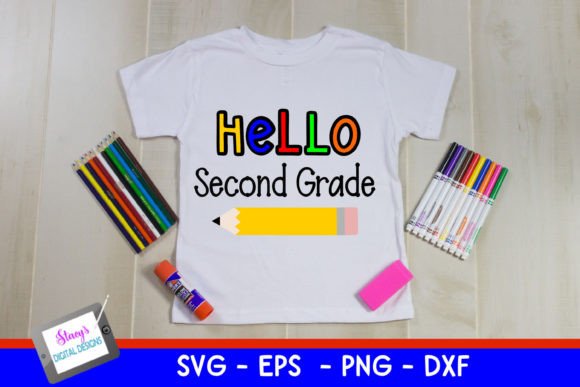
At first glance, you’ll notice the friendly, bold typography and the hand-drawn clip art pencil—warm, approachable, and full of quiet energy. But what sets this design apart is its intentional versatility. It’s not designed to sit in a folder or fade after the first week of school. Instead, it’s engineered for action: cutting, printing, layering, and personalizing across platforms and purposes.
The Back to School – Hello Second Grade SVG includes five essential file formats—SVG, PNG, DXF, EPS, and a neatly organized ZIP folder—all delivered in high-resolution, ready-to-use quality. Each format serves a distinct role:
- SVG: Ideal for Cricut Design Space, Silhouette Studio (with Designer Edition), and other vector-based cutting software. Perfect for precise cuts on vinyl, cardstock, or iron-on transfers.
- PNG: High-res, transparent-background raster file—great for digital classrooms, Google Slides welcome slides, printable name tags, or bulletin board headers.
- DXF: Widely compatible with older or industrial-grade cutting machines (like certain Roland or Graphtec models) and CAD-friendly workflows.
- EPS: A legacy vector standard that opens reliably in Adobe Illustrator, CorelDRAW, and many print shops’ prepress systems—ideal if you’re sending files to a local printer for classroom banners or laminated signs.
- ZIP folder: Clean, labeled, and instantly accessible—no hunting through nested folders or renaming files mid-project.
This isn’t over-engineering. It’s responsiveness—to your tools, your timeline, and your teaching or parenting style.
Fitting Into Real-Life Routines (Without Adding Stress)
Think about your August to-do list: shopping for supplies, labeling lunchboxes, prepping reading logs, updating classroom decor, maybe even designing a “My Second Grade Year” keepsake journal. Back to School – Hello Second Grade slots right in—not as another task, but as a time-saver.
For example:
- A homeschool parent uses the SVG to cut personalized iron-on letters for a custom backpack—done in under 10 minutes, including weeding.
- A third-grade teacher repurposes the PNG version as a draggable element in a digital “All About Me” slide deck—students add photos and voice notes beside the greeting.
- A PTA volunteer imports the EPS into Canva, layers it over a photo of last year’s class, and prints 50 “Welcome Back!” posters for hallway display—no font licensing worries, no pixelation.
No one needs another complicated tutorial or compatibility headache. That’s why the description clearly reminds users to “Please make sure these file types are compatible with your machine and software.” It’s a small sentence—but it reflects deep respect for your time and technical reality.
Why File Compatibility Matters More Than You Think
Not all SVGs behave the same way. Some contain embedded fonts converted to outlines (safe for cutting), while others rely on system fonts that may shift or break in different software. This design avoids that risk entirely: text is outlined, the pencil graphic is cleanly layered, and groupings are logical—not decorative. That means fewer surprises when you open it in Silhouette Studio versus Cricut Design Space.
Similarly, the PNG isn’t just a screenshot—it’s exported at 300 DPI with a true alpha channel, so drop shadows or subtle gradients stay crisp when resized for large-format printing. And the DXF? It preserves stroke weight and closed paths—critical for clean cuts on contour-cutting machines.
If you’ve ever spent 45 minutes troubleshooting a misaligned cut or blurry print, you know how much those details matter. They’re not “nice-to-haves.” They’re the difference between a joyful project and a frustrated pause.
More Than a Greeting—It’s a Confidence Builder
Second grade is where many children begin to see themselves as *learners*, not just students. They start asking “why,” revising their writing, and taking ownership of their space—desks, cubbies, notebooks. A well-placed “Hello Second Grade” sends a quiet, powerful message: You belong here. This is yours. You’re ready.
That’s why teachers use it on individualized desk plates (cut from glitter cardstock), why parents add it to weekly chore charts (“Second Grade Helper”), and why librarians pair it with themed reading challenges (“Hello Second Grade Book Explorer”). The pencil icon isn’t just decoration—it’s symbolic. It says: *You’ll write more. You’ll sketch ideas. You’ll show your thinking.*
And because the design avoids age-specific clip art tropes (no cartoonish backpacks or oversized apples), it feels fresh and inclusive—suitable for diverse classrooms, multilingual settings, and learners across ability levels.
How to Choose What to Use—Without Overthinking It
You don’t need all five files for every project. Here’s a quick decision guide:
- Just starting out with cutting machines? Begin with the SVG—it’s the most beginner-friendly for Cricut and Silhouette users, and tutorials abound.
- Using Canva, Google Slides, or Microsoft PowerPoint? Reach for the PNG. Drag, resize, layer—it works instantly.
- Working with a local print shop or needing professional signage? Send the EPS. It’s universally trusted and press-ready.
- Have an older or specialized cutter (like a USCutter or GCC Expert)? The DXF ensures reliable path interpretation.
- Want to edit colors, adjust spacing, or combine elements? Open the SVG in Inkscape (free) or Illustrator—vectors give you full control.
None of these choices require expertise—just knowing your goal. That’s intentional design, not accidental convenience.
Real Projects, Real Impact
One parent shared how she used the Back to School – Hello Second Grade design to create a “Second Grade Countdown Calendar”—20 pockets labeled with milestones (“First Chapter Book Read,” “Math Facts Mastered,” “Classroom Job Earned”)—each holding a small note or sticker. Her daughter checked it daily, not for rewards, but for recognition of her own progress.
Another teacher printed the design onto reusable laminated cards, then added Velcro dots. Students chose their “Hello Second Grade” card each morning to place on a classroom job board—building routine, ownership, and visual consistency.
These aren’t flashy or viral moments. They’re steady, meaningful interactions—exactly where this design thrives.
Final Thought: Celebrating the Quiet Shift
Back to school energy often centers on big transitions—kindergarten to first grade, fifth to middle school. But second grade is where foundations become fluency. Where effort starts to feel like identity. Where “I can’t yet” quietly becomes “I did.”
Back to School – Hello Second Grade meets that moment—not with noise, but with clarity, flexibility, and warmth. It’s ready when you are: whether you’re cutting at midnight before Open House, editing a slideshow during lunch, or printing labels between soccer practice and spelling homework.
It doesn’t replace your care, your lesson plans, or your love. It simply gives them a polished, purposeful voice—one pencil stroke, one clean cut, one thoughtful print at a time.