Notebooks Back to School Background
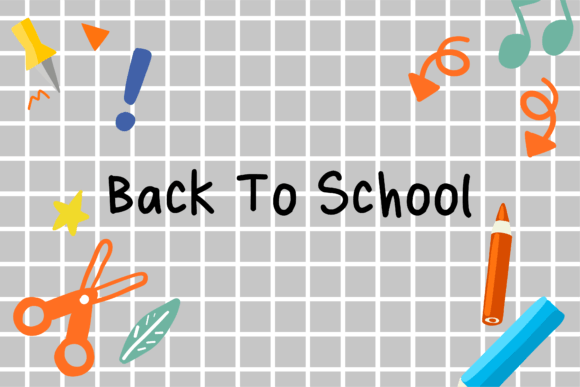
Whether you're designing a classroom bulletin board, launching an educational blog, or preparing back-to-school social media posts, a Notebooks Back to School Background offers clean, thematic visual grounding—without the clutter of text or distracting elements. It’s not just a decorative image; it’s a versatile design asset built for real-world use across digital and print projects.
What This Background Actually Is—and Why Format Variety Matters
This Notebooks Back to School Background arrives as six ready-to-use files on a 1920px × 1280px canvas: one AI (Adobe Illustrator), one EPS, one SVG, one DXF, one JPG, and one PNG. That means it’s structured for both vector precision and raster flexibility—so whether you’re resizing for a large-format poster or embedding in a web banner, quality holds.
The design itself features subtle notebook motifs—lined paper textures, soft spiral binding hints, or faint ruled margins—balanced with ample negative space. Nothing overwhelms. Nothing competes. It supports your message instead of overshadowing it.
Educators & School Staff
Teachers often need quick, professional-looking materials—think editable slide decks, printable handouts, or welcome banners for classroom doors. With the SVG or PNG version, they can drop the background into Canva or Google Slides in seconds. The AI and EPS files let them tweak colors or crop sections if adapting for grade-level themes (e.g., pastel tones for elementary, bolder accents for middle school). Reliability matters here: no pixelation when projected, no licensing surprises, and no need to hunt for attribution.
Freelancers & Small Business Owners
If you design digital planners, sell printable back-to-school bundles on Etsy, or create branded content for tutoring services, this background saves time without sacrificing polish. You might layer student name tags over the JPG version for mockups—or import the DXF file into Cricut Design Space to cut notebook-themed vinyl decals for teacher appreciation gifts. Flexibility isn’t abstract here—it’s about shipping faster, reusing assets across client projects, and keeping your toolkit lean.
Bloggers & Content Creators
A lifestyle blogger prepping a “Back-to-School Routine” post might use the PNG with transparent background to overlay quotes or icons in Photoshop. A YouTube creator building thumbnails could scale the SVG to fit 1280×720 without losing crispness—even after multiple exports. For them, speed and consistency are priorities: one background, many applications, zero redesigns.
Hobbyists & Parents Making Personalized Items
Maybe you’re printing custom notebooks for your child’s first day—or stitching a fabric banner for a homeschool co-op. The DXF file works in Silhouette Studio for cutting paper or iron-on transfers. The JPG is perfect for uploading directly to print-on-demand services like Shutterfly or Snapfish. No design degree needed. Just open, adjust, and go.
What to Consider Before You Use It
Not every background suits every goal—and that’s okay. Ask yourself:
- Ease of use? If you’re new to design tools, start with the PNG or JPG—they open anywhere. SVG works well in free tools like Inkscape or Figma. AI and EPS require Adobe software (or compatible alternatives like Affinity Designer).
- Need to scale or edit shapes? Vector formats (AI, EPS, SVG, DXF) let you change colors, isolate elements, or resize infinitely. Raster files (JPG, PNG) are fixed-resolution—ideal for web or standard prints, but less forgiving if enlarged beyond 1920×1280.
- Commercial use? This background is yours to use freely in client work, products, or promotions—no royalties or restrictions. That’s especially valuable if you’re bundling it into a paid planner or reselling physical goods.
- Learning value? Beginners can study the AI file to understand layer organization or how gradients mimic paper texture. More experienced users might extract patterns to build their own resource libraries.
Real Examples—Not Hypotheticals
– A freelance graphic designer used the SVG version to build a set of five matching Instagram story templates for a tutoring startup—changing only the headline font and accent color.
– A high school science teacher imported the EPS file into PowerPoint, placed it behind her syllabus PDF, and printed 30 copies—all sharp, consistent, and ready in under ten minutes.
– A parent crafting a “First Day of 5th Grade” photo frame opened the PNG in PicMonkey, added a subtle shadow effect, and printed it on matte cardstock—no alignment issues, no blurry edges.
When This Background Fits—and When It Might Not
This Notebooks Back to School Background shines when you want calm, focused, school-appropriate visuals—not loud graphics, cartoon characters, or seasonal distractions like apples or backpacks. It’s ideal if your project values subtlety, professionalism, or adaptability over novelty.
It may not be the best choice if you need animated versions, multi-language support, or photorealistic notebook photography. And while it’s optimized for standard widescreen proportions, extreme vertical or square crops may require manual adjustments—though the vector files make that straightforward.
One Last Thought—About Long-Term Use
Back-to-school season comes once a year—but thoughtful design assets last longer. This background doesn’t lock you into a single trend. Its neutral palette and minimal notebook cues mean it can quietly support fall-themed newsletters in October, study-tip carousels in February, or even end-of-year reflection guides in June. That kind of quiet longevity is rare—and useful.
Whether you’re opening your first Canva project or fine-tuning a client’s brand kit, having a reliable, format-rich background like this one removes friction. It’s not about flashy features. It’s about showing up prepared—with room to focus on what really matters: your students, your audience, your idea.