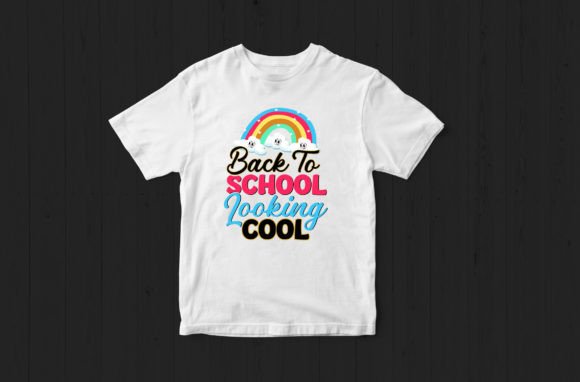
Hand Drawn Back to School Looking Cool: A Strategic Creative Asset for Modern Makers
In today’s saturated digital marketplace, authenticity isn’t just a buzzword—it’s a competitive advantage. That’s why Hand Drawn Back to School Looking Cool has emerged not merely as a seasonal design trend, but as a purpose-built creative asset aligned with evolving consumer expectations, production workflows, and brand storytelling needs. More than playful lettering or nostalgic doodle aesthetics, this hand-drawn concept represents a thoughtful convergence of human-centered design, scalable digital utility, and culturally resonant messaging—especially at the intersection of education, self-expression, and entrepreneurial creativity.
What Is Hand Drawn Back to School Looking Cool—Really?
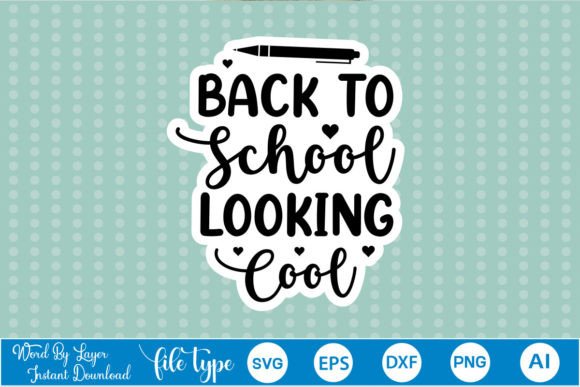
At first glance, Hand Drawn Back to School Looking Cool appears as a lighthearted, sketch-style quote—evoking chalkboard energy, notebook margins, and confident student swagger. But its value lies deeper: it’s a fully editable, vector-based design system built for versatility without compromise. Unlike static graphics locked into one format or resolution, this asset ships in both SVG (scalable, code-friendly, ideal for web and cut machines) and high-resolution PNG (print-ready, transparent-background capable). That dual-format delivery reflects a fundamental shift in how creators operate—not just designing *for* platforms, but designing *across* them.
The phrase itself—“Back to School Looking Cool”—functions as both affirmation and invitation. It speaks to students reclaiming agency over their learning identity, educators reinforcing inclusive classroom culture, and small-business owners tapping into a $30+ billion U.S. back-to-school retail market—not through mass-produced slogans, but through relatable, tactile visual language.
Why This Design Resonates Now: Beyond Nostalgia
Nostalgia alone doesn’t drive adoption. What makes Hand Drawn Back to School Looking Cool strategically relevant is how it responds to three concurrent shifts:
- The Rise of Micro-Branding: Consumers increasingly favor brands that feel personal, intentional, and locally grounded. A hand-drawn aesthetic signals care, craft, and human input—qualities that algorithmically generated or stock-heavy visuals often lack. For freelance designers, boutique stationery shops, or school PTA groups launching custom merch, this design delivers instant credibility without requiring illustration skills.
- Workflow Efficiency Meets Creative Control: Today’s makers—from Etsy sellers using Cricut machines to marketing teams building internal campaign assets—need files that work *immediately*. SVG compatibility means seamless integration with Silhouette Studio, Adobe Illustrator, Canva Pro, and even no-code platforms like Printful’s dashboard. No rasterization, no pixelation, no licensing friction. Just edit, resize, recolor, and deploy—across t-shirts, tote bags, vinyl decals, or digital welcome banners.
- Cultural Timing & Emotional Utility: “Back to school” is no longer just a calendar event—it’s a psychological transition point. Parents seek uplifting, low-pressure messaging; teens want autonomy and wit; teachers aim to foster belonging. “Looking Cool” isn’t about superficial style—it’s shorthand for confidence, readiness, and quiet resilience. That emotional resonance translates directly into higher engagement on social posts, stronger conversion on print-on-demand storefronts, and more meaningful classroom displays.
Real-World Applications: Where This Design Adds Tangible Value
Consider how Hand Drawn Back to School Looking Cool operates beyond the file download:
For Educators & Academic Teams
A middle school counselor uses the SVG to create laminated “Welcome Back” cards—customized with student names and classroom colors—distributed during orientation. The hand-drawn texture softens institutional formality while maintaining professionalism. Later, the same file becomes a reusable Canva template for weekly newsletter headers, reinforcing consistency across communications without repetitive design labor.
For Small-Business Owners & Print-on-Demand Sellers
An independent apparel brand targeting Gen Z students licenses the design not as a standalone product, but as a modular component. They layer it over custom-dyed hoodies, pair it with original line art of vintage backpacks or retro sneakers, and animate it subtly for Instagram Reels. Because the SVG retains clean paths and editable layers, color palettes shift effortlessly to match seasonal drops—no redesign required.
For Freelance Designers & Marketing Agencies
Rather than building quote lettering from scratch for every K–12 client campaign, designers embed Hand Drawn Back to School Looking Cool into branded asset libraries. It becomes a trusted “voice element”—like a signature type treatment—that clients recognize across posters, email headers, and digital ads. That consistency builds trust; the hand-drawn quality adds warmth competitors often miss when relying solely on AI-generated assets.
Technology Meets Tradition: Why Format Choice Matters
The inclusion of both SVG and high-res PNG isn’t arbitrary—it reflects a maturing ecosystem where technical requirements vary widely. SVG ensures precision for die-cut vinyl applications (think laptop decals, water bottle stickers, or classroom door signs), where crisp edges and infinite scalability are non-negotiable. PNG delivers immediate usability for platforms with limited vector support—such as certain e-commerce site builders or social media scheduling tools—while preserving transparency for layered compositions.
This dual-delivery model mirrors broader industry movement toward format-agnostic asset creation. As tools like Figma expand SVG export capabilities and browser rendering improves, designers no longer choose between “web-ready” and “print-ready.” Instead, they prioritize interoperability—and Hand Drawn Back to School Looking Cool is architected for exactly that reality.
Shifting Expectations: From Decoration to Dialogue
Today’s audiences don’t just consume visuals—they interpret tone, assess values, and infer intent. A sterile, overly polished “Back to School” graphic may read as corporate or detached. In contrast, the slight irregularity of hand-drawn lines—subtle variations in stroke weight, organic spacing, and implied pencil texture—communicates approachability and authenticity. It invites participation: “You belong here. You get to define what ‘cool’ means.”
That subtle invitation aligns with research showing Gen Alpha and younger Gen Z learners respond more strongly to visuals that reflect process, not just polish. Sketch-style elements signal that learning is iterative, creative, and human—not a linear path to a pre-defined outcome. When used intentionally, Hand Drawn Back to School Looking Cool becomes part of a larger narrative about growth mindset, inclusive identity, and joyful preparation.
Final Thought: An Asset That Grows With Your Goals
Hand Drawn Back to School Looking Cool succeeds because it balances specificity with flexibility. It’s rooted in a timely cultural moment—but engineered for longevity. Its editable nature means it adapts to new mediums (AR filters, interactive PDFs, generative design prompts) without losing core identity. Its thematic focus supports seasonal campaigns while remaining evergreen enough for year-round use in mentorship programs, study-group branding, or academic coaching materials.
Most importantly, it respects the time, expertise, and intention of its users. Whether you’re a solo entrepreneur launching your first merch line, a district communications director refreshing campus signage, or a designer building reusable templates for education clients—you’re not buying clip art. You’re acquiring a versatile, values-aligned tool designed to amplify voice, streamline execution, and connect authentically.
So yes—you can print it on mugs, stitch it onto tote bags, cut it for window decals, or feature it on poster cards. But more significantly, you can use it to say something real, with clarity and confidence, right when it matters most.