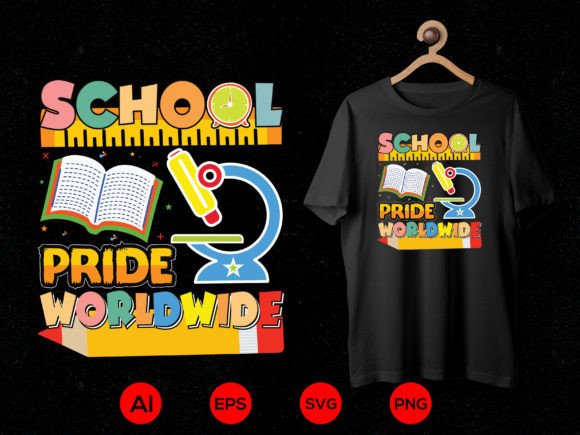
Back to School T-shirt Design 64: A Practical Look at Versatility, Format Options, and Real-World Use
Back to School T-shirt Design 64 stands out not because it’s the most elaborate or trend-driven option on the market—but because of its functional consistency across production methods and design workflows. Unlike many school-themed graphics that prioritize visual novelty over technical flexibility, this design delivers a balanced combination of aesthetic cohesion and file utility. It’s built for adults who manage school spirit programs, small-batch apparel businesses, PTA volunteers coordinating spirit wear, or educators designing classroom materials—not for passive consumers scrolling through pre-made merch.
What Makes Back to School T-shirt Design 64 Distinctive?
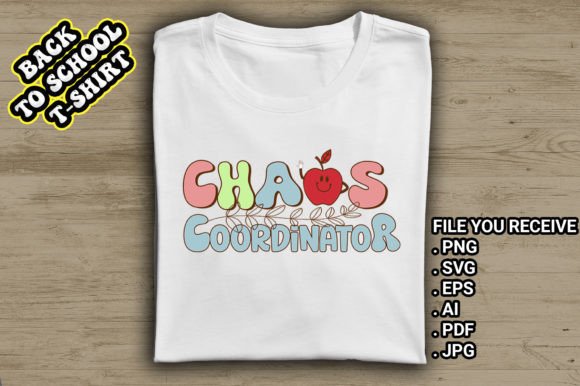
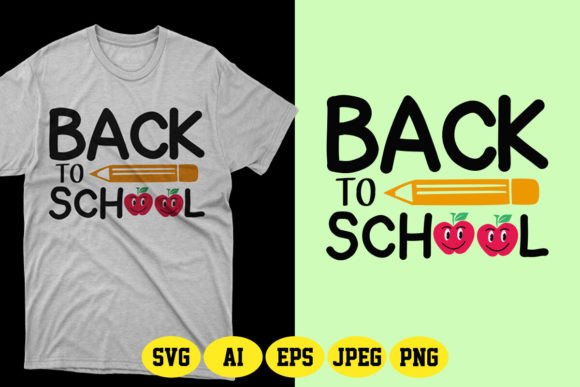
At its core, Back to School T-shirt Design 64 is a vector-based digital asset package centered around a cohesive school pride motif—often featuring stylized typography, subtle academic icons (like open books, graduation caps, or pencils), and inclusive phrasing such as “School Pride Worldwide You.” Its distinction lies less in artistic uniqueness and more in how it’s engineered for reuse: all elements are 100% vector shapes, meaning they scale infinitely without pixelation; colors can be adjusted with precision in any vector editor; and the entire set is delivered in four widely supported formats—AI (Adobe Illustrator), EPS (cross-platform compatibility), PNG (with transparent background for quick overlays), and SVG (ideal for web use and responsive scaling).
This isn’t a single raster image sized for one t-shirt size or print method. It’s a modular toolkit. Each component—text, icon, border, and layout layer—is editable, separable, and color-independent. That makes it suitable for screen printing, direct-to-garment (DTG), heat transfer vinyl (HTV), and even laser engraving on wood or acrylic for classroom signage.
How It Compares With Other Back-to-School Design Resources
Many back-to-school clip art collections offer high volume—hundreds of isolated icons or themed bundles—but lack unified design language or consistent vector integrity. Others rely heavily on raster files (JPG, PNG only), limiting scalability for large-format prints or fine-detail applications like embroidery digitizing. Back to School T-shirt Design 64 avoids those constraints by prioritizing vector fidelity first. While some alternative packs include layered PSD files for photo-editing workflows, they often sacrifice clean paths and editable text—making font swaps or alignment adjustments cumbersome. In contrast, the AI and EPS files here retain live type and compound paths, enabling efficient localization (e.g., swapping “You” for a specific school name) without redrawing.
Compared to subscription-based design platforms that provide unlimited downloads but lock users into proprietary editors or watermarked previews, Back to School T-shirt Design 64 offers immediate, offline access to production-ready assets—no monthly fee, no export limits, no attribution requirements. That matters for teams managing tight budgets or needing to archive files long-term without platform dependency.
Strengths Worth Weighing
- Format versatility: Four native file types cover nearly every common production pipeline—from commercial screen printers using Illustrator to hobbyists cutting designs on Cricut or Silhouette machines via SVG.
- Color adaptability: Since all shapes are vector-based and non-rasterized, changing a navy blue to maroon—or converting the whole palette to grayscale for cost-effective two-color printing—takes seconds, not hours.
- Scalability without compromise: Whether printed on toddler-sized tees or 48"x72" canvas banners, the design retains crisp edges and proportional balance.
- Cross-application utility: Beyond apparel, the same files work for printable classroom posters, iron-on transfers for student notebooks, engraved wooden awards, sticker sheets for event handouts, or invitation suites—all without reformatting.
Tradeoffs and Limitations to Consider
Back to School T-shirt Design 64 isn’t optimized for highly customized illustration styles—think hand-drawn chalkboard textures, watercolor washes, or photorealistic renderings. If your goal is a boutique-level, artisanal look with tactile texture layers, you’ll likely need supplemental raster assets or custom illustration services. Similarly, while the design supports multilingual adaptation (e.g., translating “School Pride Worldwide You” into Spanish or French), the base files don’t include alternate language versions—you’d edit the text manually in Illustrator or Affinity Designer.
It also doesn’t include pre-sized garment templates (like standard chest print or full-back layouts), nor does it bundle font files. Users must have access to standard system fonts or licensed typefaces to maintain typographic integrity when editing text elements. And while the PNG version includes transparency, it’s provided at one resolution—so for ultra-high-DPI printing (e.g., 300+ DPI at 12" width), the vector formats remain the reliable source.
When Back to School T-shirt Design 64 Fits—and When It Might Not
This design excels in situations where consistency, speed, and multi-use efficiency outweigh the need for stylistic experimentation. For example:
- A middle school PTA ordering 150 shirts across six grade levels can use the same core design, change colors per grade, and add class years in minutes—not days.
- A small print shop handling orders from multiple local schools can store the AI file once and generate school-specific variants (logo swaps, mascot integration, district colors) without recreating layouts from scratch.
- An after-school program creating reusable classroom decorations can cut the SVG version on adhesive vinyl for whiteboard labels, then repurpose the EPS file for laser-cut wooden name tags—all from one source.
Conversely, if your project requires animated versions (for social media or digital signage), 3D mockups, or integration with automated print-on-demand platforms that demand specific file naming conventions or bleed setups, you may need to supplement Back to School T-shirt Design 64 with additional prep work—or consider a service that includes those deliverables.
Practical File Use Across Common Tools
Most users interact with these files in one of three ways:
- For screen printing or DTG: Open the AI or EPS in Illustrator, adjust Pantone or CMYK values, outline fonts if needed, and export as PDF/X-1a for separation-ready output.
- For cutting machines (Cricut, Silhouette): Import the SVG directly—no conversion needed. The clean vectors ensure smooth cuts, even on intricate outlines.
- For digital sharing or web use: Use the SVG for responsive displays (e.g., school website banners) or the PNG for email newsletters and social posts where vector support isn’t guaranteed.
The absence of embedded raster effects (like shadows or gradients that rasterize on export) means fewer surprises during production. What you see in the vector preview is what prints, cuts, or displays—reducing revision cycles and proofing overhead.
Making an Informed Choice
Choosing Back to School T-shirt Design 64 isn’t about selecting the “best” back-to-school graphic—it’s about matching file architecture to your actual workflow, team capacity, and output goals. If you value editable, scalable, cross-platform assets that reduce repetitive setup and support both physical and digital applications, it’s a pragmatic choice. If your priority is turnkey social media kits, branded video intros, or deeply personalized illustrations, you’ll likely need complementary resources.
Ultimately, the strength of Back to School T-shirt Design 64 lies in its reliability—not its novelty. It’s designed to be used, adapted, and reused—not admired once and archived. For educators, organizers, and small business owners balancing time, budget, and quality, that kind of functional consistency often matters more than visual flash.