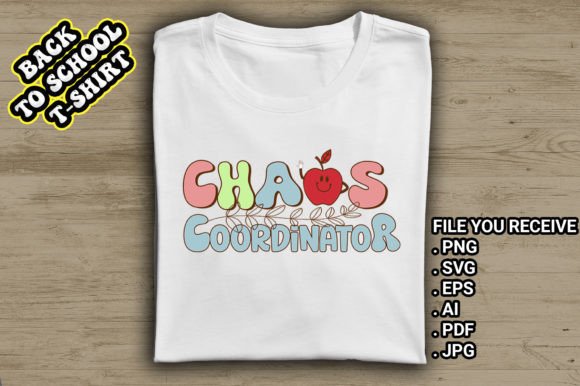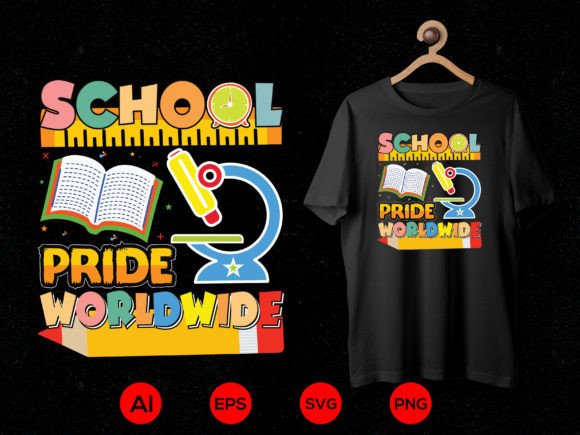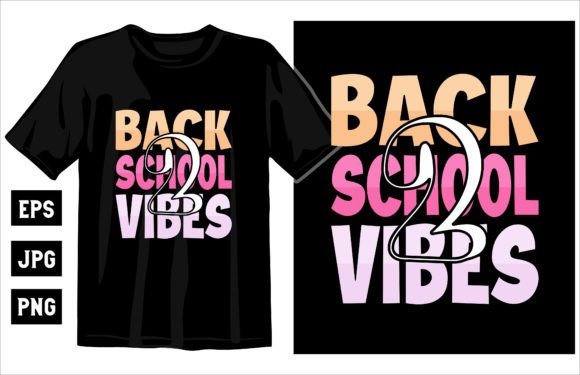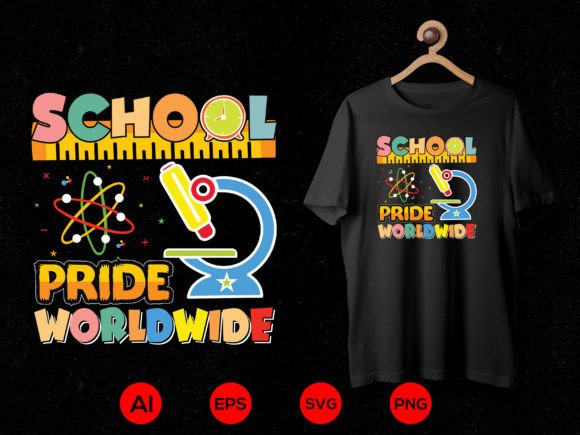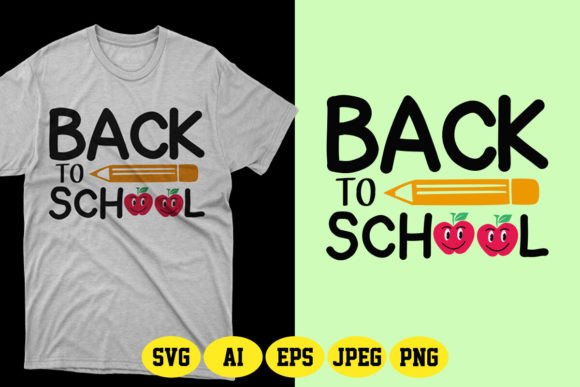
Back to School SVG T-Shirt Design 6: A Practical Evaluation for Print-on-Demand Creators
Back to School SVG T-shirt Design 6 is a ready-to-use vector-based apparel graphic tailored specifically for seasonal demand in the education niche. Unlike generic school-themed clip art or overused chalkboard motifs, this design balances simplicity with visual clarity—featuring clean typography, scalable vector elements, and intentional negative space that supports both light and dark garment applications. It’s not just another “back to school” graphic; it’s built with production efficiency and commercial flexibility in mind.
What Sets Back to School SVG T-Shirt Design 6 Apart
This design stands out through its technical execution rather than novelty alone. The file package includes editable AI and EPS source files alongside print-ready PNGs (4500–5400px), SVG cut files, and layered mockups—all formatted for immediate integration into common POD workflows. Its 100% vector construction means resizing causes no quality loss, whether applied to a toddler onesie or a large-format tote bag. More importantly, color separation is cleanly managed: each element can be individually recolored without raster artifacts or layer misalignment—a critical advantage when preparing variants for black, navy, heather gray, or white tees.
The design also avoids overly literal imagery—no cartoon apples, oversized pencils, or cutesy backpacks that quickly date or limit audience appeal. Instead, it leans into modern typographic rhythm and subtle iconography (e.g., a stylized graduation cap integrated into letterforms or minimalist book silhouettes) that reads well at small sizes and retains impact on full-front prints. That balance makes it adaptable across age groups—from preschool teachers’ staff shirts to high school club merch—without requiring redesign.
How It Compares to Other Back-to-School Design Options
Many creators start by sourcing free SVG bundles or low-cost marketplaces offering dozens of “school” designs per pack. While cost-effective, those often share limitations: raster-heavy elements, inconsistent stroke weights, non-unified color palettes, or embedded fonts that break upon editing. Back to School SVG T-shirt Design 6 avoids those pitfalls by delivering fully outlined vectors, standardized spacing, and documented color swatches—reducing pre-production time significantly.
Compared to custom illustration commissions, this design trades uniqueness for speed and predictability. A commissioned piece may better reflect a brand’s voice or target a hyper-specific demographic (e.g., STEM-focused middle-schoolers), but it typically requires 1–3 weeks of revision cycles and starts at $150–$400. Back to School SVG T-shirt Design 6 delivers professional-grade output instantly, at a fraction of the cost—ideal for testing seasonal demand before investing in bespoke assets.
It also differs from template-based design tools (like Canva or Placeit generators) in that it offers true editability—not just text swaps, but structural adjustments. You can isolate and reposition individual glyphs, adjust kerning manually, or replace icons with alternate symbols while preserving alignment and proportion. That level of control matters when optimizing for different platforms: a simplified version for Instagram ads, a denser layout for Etsy thumbnails, or a cropped variant for pocket prints.
Practical Use Cases and Real-World Fit
Back to School SVG T-shirt Design 6 works best when you need reliable, scalable assets for time-sensitive launches—especially between late July and early September. Teachers, homeschool co-ops, tutoring centers, and PTA groups frequently order small-batch apparel during this window, and having a polished, production-ready file eliminates delays caused by last-minute edits or compatibility issues with cutting machines or DTG printers.
For POD sellers using platforms like Printful, Gooten, or Gelato, the included transparent PNG and SVG files integrate smoothly with automated workflows. The high-resolution PNG ensures crisp rendering on product mockups, while the SVG enables precise cutting for heat-transfer vinyl or laser-cut appliqué. The EPS file supports legacy RIP software used by some screen printers—adding versatility beyond digital-first channels.
That said, it’s not universally optimal. If your store focuses exclusively on hand-lettered, watercolor-style illustrations or vintage-inspired distressed graphics, this design’s clean vector aesthetic may feel tonally mismatched. Similarly, if you serve international markets where “back to school” carries different cultural weight—or where academic calendars vary significantly (e.g., Southern Hemisphere countries starting terms in February)—its timing and messaging may require adaptation or localization.
Key Decision Factors to Consider
When evaluating whether Back to School SVG T-shirt Design 6 fits your needs, consider these practical criteria:
- Workflow compatibility: Do you use Adobe Illustrator, Affinity Designer, or Cricut Design Space? All support the included file types—but if you rely solely on browser-based editors without SVG import, the EPS or PNG versions become your primary assets.
- Production volume: For under 50 seasonal SKUs, the time saved on manual cleanup and resizing justifies the investment. For enterprise-level catalogs (200+ designs), you may benefit more from a subscription-based vector library with broader stylistic range.
- Audience expectations: Parents shopping for kindergarten gear often prefer friendly, approachable visuals. Older students and educators respond better to understated, confident typography. This design sits comfortably in the middle—neither too juvenile nor overly academic.
- Color strategy: Because every element is independently color-adjustable, you can maintain consistent branding across multiple products (e.g., matching mugs, stickers, and shirts) without recreating palettes from scratch.
When You Might Choose Something Else
Back to School SVG T-shirt Design 6 is strongest as a tactical solution—not a long-term brand cornerstone. If you’re building a signature line around educational empowerment, inclusive learning, or subject-specific themes (e.g., “Math Is My Superpower” or “Future Biologist”), you’ll likely outgrow its general-purpose structure within one or two seasons. In those cases, investing in a cohesive series—designed with shared visual language, recurring motifs, and scalable templates—offers better long-term ROI.
Likewise, if your audience engages heavily with social proof (e.g., TikTok-driven trends, meme-infused slogans), static vector files—even high-quality ones—may need supplemental customization: animated versions for Reels, layered PSD files for quick text-over-video edits, or alternate formats optimized for AR try-ons. Those capabilities aren’t included here, though they can be added externally with moderate design skill.
Finally, licensing clarity matters. While this design permits commercial use—including resale on POD platforms—it doesn’t grant exclusive rights. If differentiation is a core part of your value proposition (e.g., “only available through our shop”), you’ll need either exclusivity clauses or original creation.
Final Thoughts for Informed Selection
Back to School SVG T-shirt Design 6 fills a specific, well-defined gap: it’s a technically sound, commercially viable, seasonally relevant asset for creators who prioritize execution speed, cross-platform readiness, and minimal post-processing. It won’t replace strategic brand development or deep audience research—but it removes friction where friction commonly exists. Used thoughtfully—as one component among many in a diversified design library—it supports consistency, scalability, and responsiveness without compromising quality.
Before downloading or purchasing, test the included mockups against your actual product photos. Check how the transparent PNG renders over your preferred shirt color and fabric texture. Open the EPS in your vector editor to confirm layer naming and grouping logic match your workflow. And if you plan to pair it with complementary designs (e.g., matching hoodies or parent/child sets), verify that proportions and visual weight align across pieces. Small validations like these turn a capable resource into a reliable one.