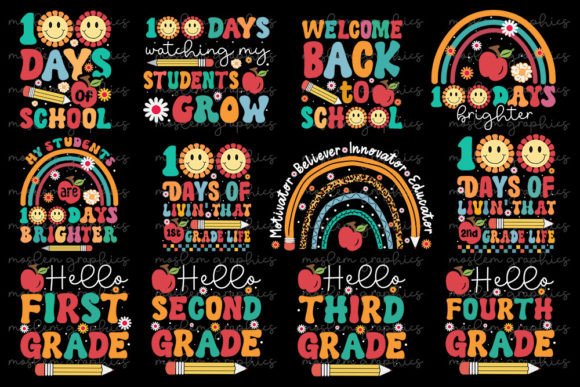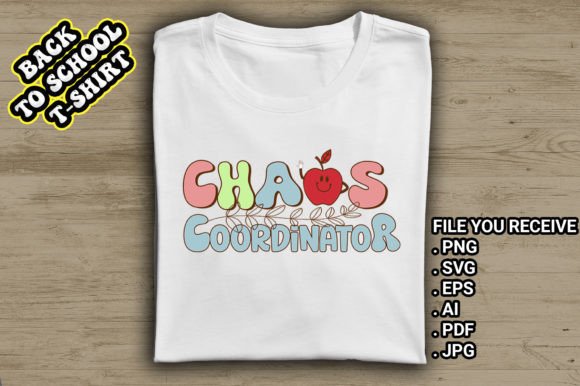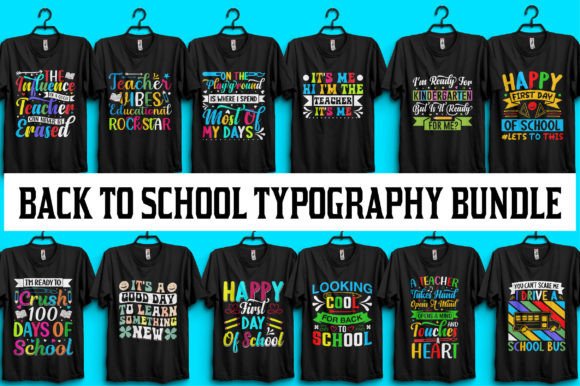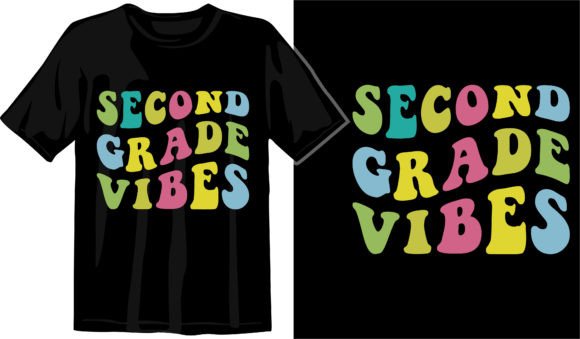
100 Days Smarter Back to School SVG
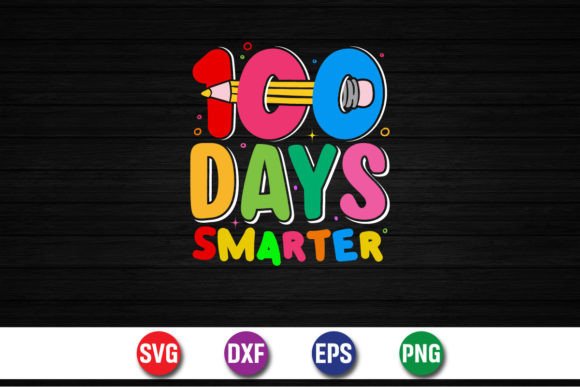
Back-to-school season isn’t just about new notebooks and sharpened pencils—it’s a moment of momentum. For creators who design for classrooms, small businesses, or personal craft projects, the 100 Days Smarter, Back to School SVG is more than decorative clipart. It’s a flexible, production-ready vector asset built for real-world use—whether you’re printing t-shirts for a school fundraiser, cutting vinyl decals for classroom doors, or building digital lesson materials.
What Makes This Design Stand Out
This isn’t a static PNG stretched across sizes. Every element in the 100 Days Smarter, Back to School SVG is crafted as 100 individual vector shapes—fully scalable without pixelation, fully editable without distortion. You can isolate letters, adjust spacing, recolor individual icons (like apples, pencils, or graduation caps), or simplify the layout for younger audiences—all within your editing software.
The package includes AI (Illustrator CS6+), EPS 10, SVG, DXF, and PNG files. That means compatibility across platforms: Cricut Design Space, Silhouette Studio, CorelDRAW, Inkscape, and Adobe Illustrator. No conversion headaches. No missing layers. Just clean, organized source files ready to open and adapt.
Creative Possibilities—Beyond the Obvious
Think beyond t-shirts. Here’s how different users are applying this design with intention:
- Educators: Use the SVG to cut durable vinyl lettering for classroom walls—pair “100 Days Smarter” with student growth trackers or reading challenge banners. Swap out the “smarter” text for “kinder,” “braver,” or “more curious” to align with social-emotional learning goals.
- Small Business Owners: Bundle it with matching mugs, tote bags, and stickers for back-to-school pop-ups. Change colors to match school branding (e.g., navy + gold for a local high school) and export layered SVGs for consistent sublimation prints.
- Hobbyists & Crafters: Layer the design over heat-transfer vinyl on denim jackets or backpacks. Since every shape is color-changeable, try monochrome versions for minimalist style—or add gradients using your machine’s multi-pass settings.
- Bloggers & Content Creators: Import the SVG into Canva or Figma to build Instagram story templates, printable calendars, or newsletter headers. The vector clarity ensures crisp rendering—even at small sizes on mobile screens.
How to Adapt It Thoughtfully
Adaptation starts with purpose—not just aesthetics. Ask yourself: Who sees this? Where does it live? What action should it support?
If you’re designing for elementary students, simplify the layout. Remove fine details from icons, increase stroke weight, and use high-contrast colors (e.g., black outlines + bold primary fills). For older students or staff appreciation, lean into typography—swap the default font for something modern and legible at distance, like Montserrat or Poppins, then re-export the updated SVG.
For digital use, export only what you need: SVG for web, PNG with transparent background for social posts, or PDF for print-ready handouts. Don’t overload files with unused layers—delete hidden objects before saving final versions. That keeps load times low and editing efficient.
Color Strategy That Works
“100 Color Changeable” isn’t marketing speak—it reflects real flexibility. But choice doesn’t mean randomness. A thoughtful palette strengthens recognition and readability.
Start with your context: School colors? Brand guidelines? Seasonal tones? Then apply constraints. Limit primary fills to 2–3 base colors, using shades and tints for variation—not entirely new hues. For example, if your base is teal, use light teal for backgrounds and dark teal for outlines. This maintains cohesion across formats (t-shirt, sticker, banner) while keeping the design instantly identifiable.
Test contrast. Run your chosen palette through a free online contrast checker (like WebAIM’s Contrast Checker) before finalizing. Text over busy backgrounds needs at least 4.5:1 contrast ratio—especially important for classroom posters viewed under fluorescent lighting.
Real Projects, Real Results
A homeschool co-op in Oregon used the 100 Days Smarter, Back to School SVG to create reusable dry-erase countdown boards. They cut the numbers separately, laminated them, and mounted magnets on the back—students move one number each day. The vector scalability meant all digits stayed sharp even at 8” tall.
A boutique apparel shop in Austin layered the design with custom illustrations (a rocket ship, a lightbulb, an open book) and offered “Build Your Own Growth Shirt” kits. Customers chose their icon combo, selected fabric color, and added names—boosting average order value by 37% during August.
An instructional coach adapted the file for Google Slides, turning each day into an interactive slide with reflection prompts. She kept the core phrase intact but replaced generic icons with subject-specific ones (a beaker for science, a treble clef for music)—making the concept feel relevant across disciplines.
Keeping It Organized and Original
When you modify the SVG, preserve the original folder structure. Name your edited files clearly: 100DaysSmarter_ScienceVersion.svg, not newfile_v2_final_FINAL.ai. That saves time when updating designs later or sharing assets with collaborators.
Originality comes from application—not just alteration. You don’t need to redraw the entire thing to make it yours. Try combining it with your own photography (e.g., overlay the phrase on a photo of students planting a garden), pairing it with hand-lettered quotes, or animating it for a short video announcement. The vector foundation gives you room to build—not replace.
Getting Started—No Overwhelm
You don’t need advanced design skills to use this effectively. Start small:
- Open the SVG in your cutting software.
- Select one element—say, the apple icon—and change its fill to match your project’s main color.
- Resize the full phrase to fit your material (e.g., 10” wide for a standard t-shirt chest print).
- Export or cut.
- Repeat with variations once you see how it works in context.
That first version won’t be perfect—and it shouldn’t be. Iteration happens after use, not before. The strength of the 100 Days Smarter, Back to School SVG lies in its readiness to serve your goals—not define them.