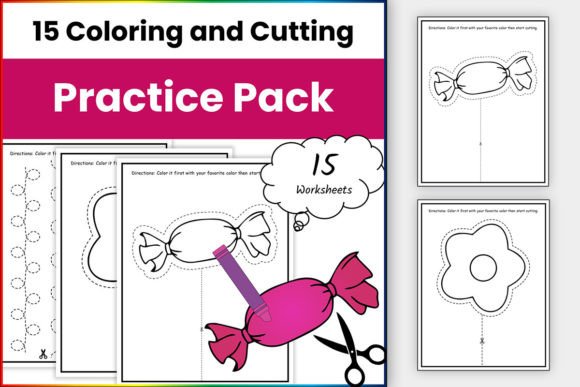
Scissor Skills Practice - Back to School
Getting little hands ready for kindergarten isn’t just about knowing letters or counting to ten—it’s about building the physical confidence to hold a pencil, turn a page, and yes, safely and successfully use scissors. That’s where Scissor Skills Practice - Back to School steps in: a thoughtfully designed, printable resource built specifically for Pre-K and Kindergarten students who are just beginning to explore cutting as a foundational fine motor skill.
This isn’t a one-size-fits-all worksheet pack. It’s 15 pages of intentional, developmentally appropriate practice—each activity calibrated to match how young children actually learn: through repetition, visual cues, manageable challenge, and quiet moments of focused success. Whether you’re a teacher setting up your first learning center, a homeschool parent prepping for September, or an occupational therapist supporting early motor development, this pack meets real needs—not just curriculum checklists.
Where and When This Pack Fits Into Real Life
You’ll find Scissor Skills Practice - Back to School most useful in the spaces where structure and support overlap: the first weeks of school, morning routines before circle time, small-group instruction blocks, or even at home during summer-to-fall transition weeks. It’s not meant to be rushed—it’s meant to be returned to. A child might cut the same shape three times over two weeks, each time with slightly steadier hands and more confident control.
In classrooms, teachers use these pages as part of fine motor centers—paired with tweezers, playdough, or lacing cards—to create a balanced station that builds dexterity across multiple tools. In homes, caregivers often print one page at a time and keep it in a “morning folder” alongside tracing sheets or number cards—giving kids a predictable, low-pressure way to start the day with purposeful movement.
For therapists or early intervention specialists, the progression matters: straight lines first (easier to track visually), then gentle curves (introducing wrist rotation), then full-picture outlines (requiring planning and spatial judgment). That sequence isn’t accidental—it mirrors how neuro-muscular pathways develop in early childhood.
How Different Users Get Real Value From It
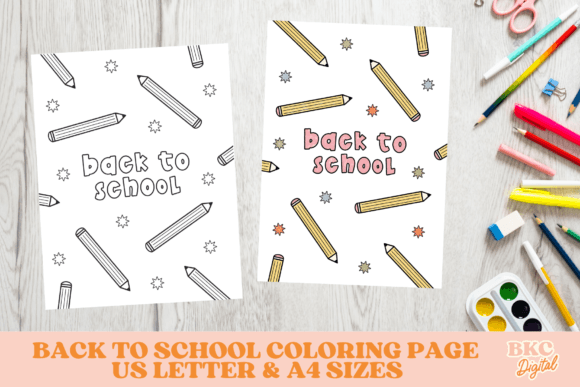
Educators appreciate that each page is clean, uncluttered, and free of distracting graphics—so attention stays on the line or shape being cut. There’s no guessing what to do; instructions are implied through bold outlines and generous white space. You can pull out just the “shape cutting” pages for a geometry-integrated fine motor lesson, or mix in curvy-line sheets during a unit on ocean animals (the wavy lines double as water ripples).
Homeschooling parents love the portability and zero prep time. No laminating, no cutting templates, no special materials—just print, grab child-safe scissors, and go. Many keep a binder organized by skill type so they can easily rotate activities based on observed progress (e.g., “We’ve mastered squares—let’s try triangles next”).
Creative professionals and small business owners sometimes repurpose the clean-cutting layouts for client-facing projects—like designing simple cut-out invitations for preschool birthday parties or creating tactile elements for sensory-friendly classroom displays. Because the files include both high-res JPGs and print-ready PDFs, they adapt smoothly whether you're crafting for screen or paper.
Occupational therapists note how well the shapes and lines align with standard developmental benchmarks. The gradual increase in complexity supports goal tracking: “Student cuts 4/5 straight lines independently” or “Maintains grip for 90 seconds while following a curved path.” And because all pages are sized to standard 8.5×11”, they integrate seamlessly into existing data-collection systems or IEP documentation folders.
What to Consider Before Using It
First—scissors matter. These activities assume safe, age-appropriate, spring-assisted scissors (not adult or dull ones). If your students are new to cutting, pair the first few pages with verbal prompts (“Fingers in the holes, thumb on top”) and hand-over-hand guidance—not to do it *for* them, but to help them feel how pressure and motion connect.
Second—pace it. Don’t assign five pages in one sitting. One carefully completed shape, followed by glue practice or drawing inside the cut-out, is more valuable than rushed, fragmented attempts. Watch for fatigue: if a child starts pressing too hard or drifting off the line, it’s time to pause—not push.
Third—observe *how* they cut, not just whether they finish. Do they rotate the paper instead of their wrist? Do they start mid-line instead of at the edge? Those habits tell you more than any checklist. The Scissor Skills Practice - Back to School pack gives you consistent, repeatable material to notice those patterns—and adjust support accordingly.
Why the Details Actually Matter
The 8.5×11” size isn’t arbitrary—it fits standard classroom printers, binders, and display pockets without cropping or scaling. The “no bleed” PDF setting means nothing gets cut off when printed on basic office printers (a real pain point for educators using shared machines). And having both JPG and PDF versions? That’s for flexibility: upload JPGs directly into digital learning platforms like Seesaw for hybrid learners, or print the PDF for crisp, reliable results every time.
It’s also visually grounded—not cutesy, not overwhelming. Shapes are bold and easy to distinguish. Lines have consistent weight and spacing. There’s enough margin around each element so little hands don’t accidentally snip into the next activity. That kind of thoughtful design saves time, reduces frustration, and lets the skill—not the setup—take center stage.
More Than Just Cutting—It’s About Readiness
Fine motor skills are the quiet engine behind so much early learning. Holding a crayon steadily supports letter formation. Coordinating eyes and hands helps track text across a page. Judging space and distance translates to understanding math concepts like size comparison or positional language (“inside,” “around,” “between”).
When a child confidently cuts out a star, they’re not just practicing scissor use—they’re strengthening neural connections, building stamina for seated tasks, and gaining the quiet pride that comes from mastering something tangible. That confidence carries over: into writing, into art, into asking questions, into raising their hand.
Scissor Skills Practice - Back to School doesn’t promise overnight transformation—but it does offer 15 consistent, calm, capable opportunities for growth. Not flashy. Not complicated. Just right for where kids are, and exactly what many adults need to support them well.